
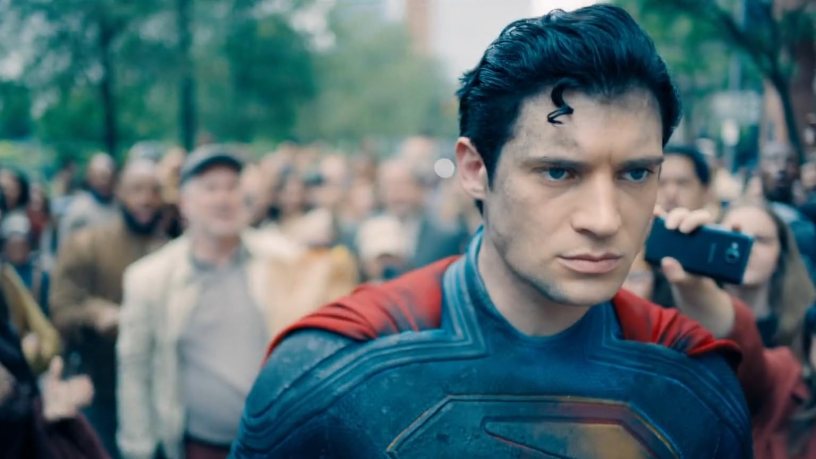
I receive at least ten articles daily hyping up James Gunn’s Superman. The articles range from early impressions, behind-the-scenes looks, comments from the cast, and tidbits about production.
The algorithm gets me. I am a DC fan. And against every bit of wisdom from the past, I do not want to put hope in this movie. DC fans are ALWAYS gambling when it comes to live-action portrayals. Even the most quality efforts get so little attention that it’s not worth dreaming and planning a future. I have hung on to the hope of Aquaman, Shazam, Blue Beetle, and Batman with bad returns on investment, but somehow I persist in being the closet DC fan.
I don’t even like HBOMax or Warner Bros, but I will tolerate them for DC.
When James Gunn said he was going to bring his Suicide Squad and Guardians of the Galaxy magic to the new DCU, I was like Mulder from X-Files, I want to believe.
Every so often my hope will be rewarded. “Gunn’s Superman is a return to comic book greatness,” or “Superman is a beautiful movie,” give me sparks of hope. But then I hear that The Times calls it “a migraine of a movie” and (if I am being honest) some of the hero costumes look high school theater quality. My hope and disappointment rises and dips with every article and expectation. I can’t forget to mention that the internet will FLOOD with Snyderverse fans saying “I told you so,” if it doesn’t do well.
I often find myself wondering why I get so wrapped up in fandoms. I don’t gain anything financially if a movie succeeds, and DC is never going to reach out to me for creative consultation, even though they really should! Plus, the best stories about Superman, Batman, and Aquaman have already been told in comics. So, why does everyone seem to focus so much on live-action adaptations?
But I do, and I need to stop myself.
We live in a world where the greatest can fail. Good directors often produce mediocre products. Even the MCU, backed by Disney, can’t guarantee a winner. Every human creation has the potential to be terrible or achieve Nolan-level quality (my standard).
It’s absurd to place all your hopes in the entertainment industry. Aren’t we just products of marketing and manufactured hype? The next great work of art could very well be a self-published book by someone unknown. I could easily become an overnight fan of A24 films if I chose to. The notion that the success or failure of a comic book movie will determine your life is a weak mindset.
I believe it’s a Western tendency to place genuine hope in entertainment companies. In particular, it seems to be an American phenomenon to make people choose between DC and Marvel. Hope represents a promise of excellence, which only the most capable entities can fulfill. It shouldn’t be placed on the shoulders of imperfect industries. While hope can sometimes be delusional and lead to crushing disappointment, this should inspire us to seek more reliable systems. Although political parties, companies, and products are often destined to fail, God appears to be a more dependable source of hope.
+ Hoping in God looks at the bigger picture, the renewal and restoration of all creation
+ Hoping in God focuses on God’s characteristics: omnipotence and omniscience
+ Hoping in God is a close and personal choice. You are basing it on a relationship. You can trust your friends more than any company.
+ Hoping in God is smarter when you take into account his history. No entertainment studio has that kind of resume.
A geek’s greatest challenge will always be what they prioritize. If we put our priorities in the entertainment industry, we will be on a roller coaster of emotions. If we transfer that hope to greater and more substantial things, we can rely on a relationship with the creator of the universe.
 The Checkpoint Blog